
Alt Carbon in Darjeeling: Brewing better soil from India’s tea country
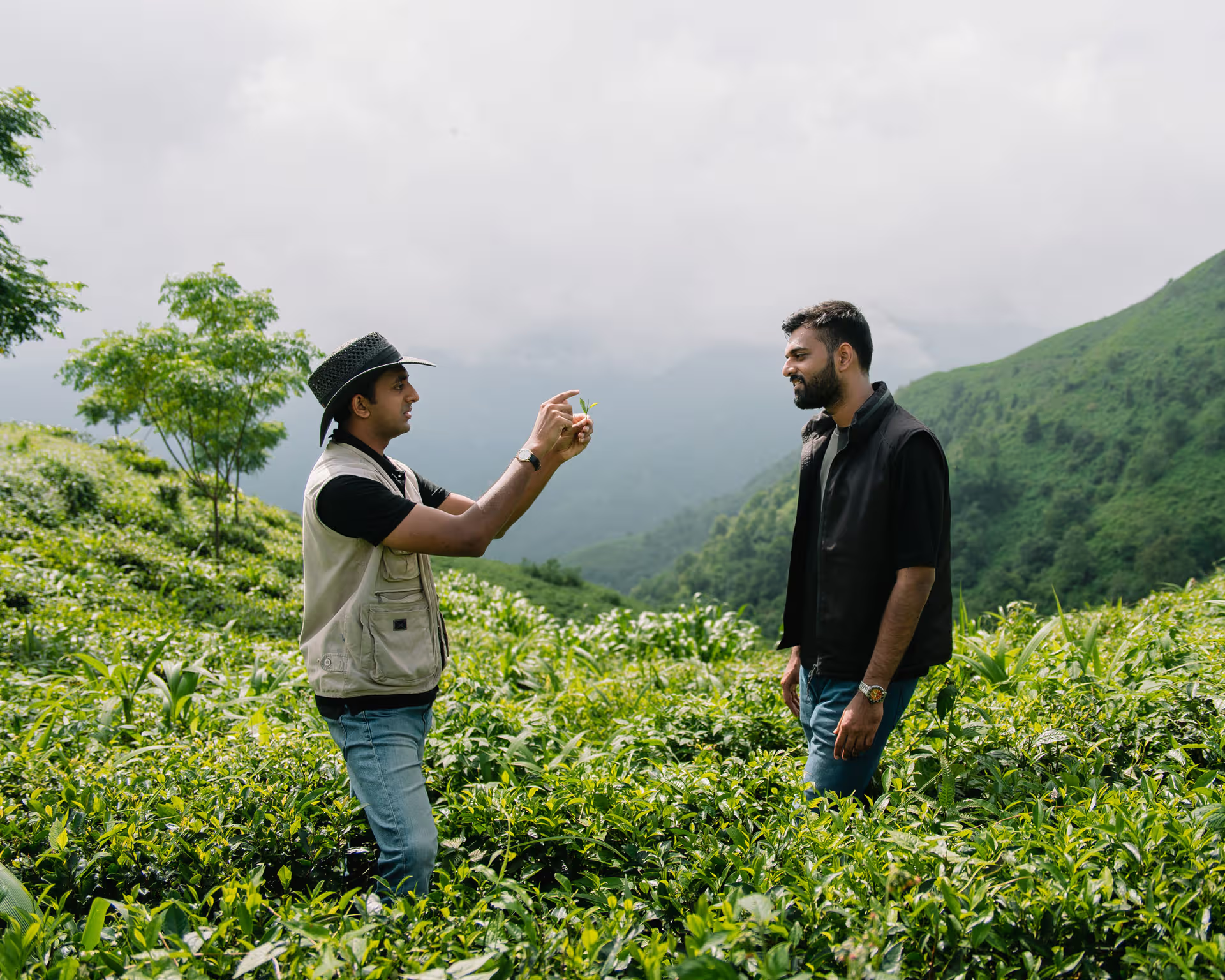
Sparsh (left) and Shrey (right) Agarwal
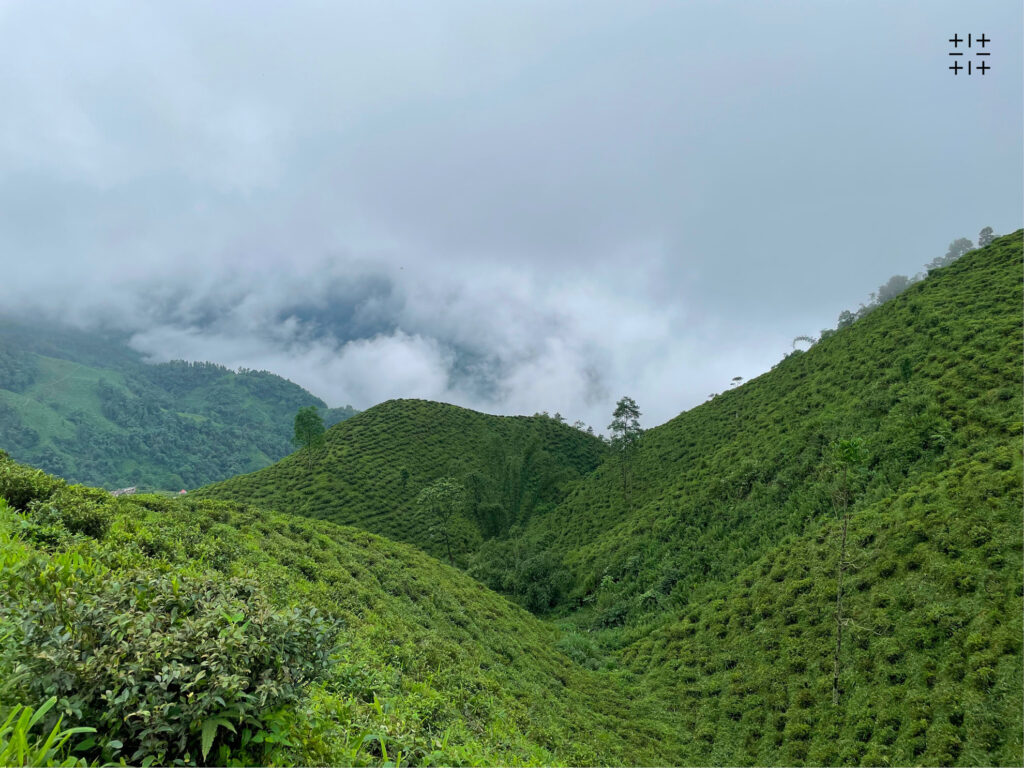
Nestled in the Himalayan foothills and once a summer resort for the British Raj elite, Darjeeling today is famous for its stunning mountain views, unique cultural influences, and perhaps most of all, its world-renowned tea.
For Shrey Agarwal and Sparsh Agarwal, their heritage is steeped in Darjeeling tea. Their Marwaari family from Bengal farmed the prized crop for generations. Despite these shared roots, the brothers pursued different paths. Shrey studied chemistry and mechanical engineering at the Birla Institute of Technology and Science, then worked at early-stage tech firms in Bengaluru. Meanwhile, Sparsh studied international climate law at the University of Oxford.
“When the pandemic hit in 2020, Sparsh and I drove from Kolkata to Darjeeling because our family planned to sell one of our tea gardens, which was considered the crown jewel of our heritage,” Shrey said. Upon their arrival, the sight of the 1,000 acres of forest and cultivation, teeming with flora and fauna but in dire need of soil support, inspired the brothers not to sell. “We decided to put our degrees to use and try to revive our own tea garden in Darjeeling.”
Together, Shrey and Sparsh renovated Second Chance House as a symbol of Darjeeling’s renewal. From Second Chance House, they launched Dorje Teas, a direct-to-consumer brand that appeared on Shark Tank India, to revive the estate. Thirsty for even greater impact, the next step was combining carbon markets, culture and land stewardship, while creating additional revenue streams and restoring soils.
“We spent nearly four years looking at every available approach to carbon removal and carbon avoidance,” Shrey said. “Given my chemistry background, I wanted something fundamentally scientific. We wanted a solution that could be scalable, rigorous and rooted in natural processes, rather than something that felt purely financial or speculative.”
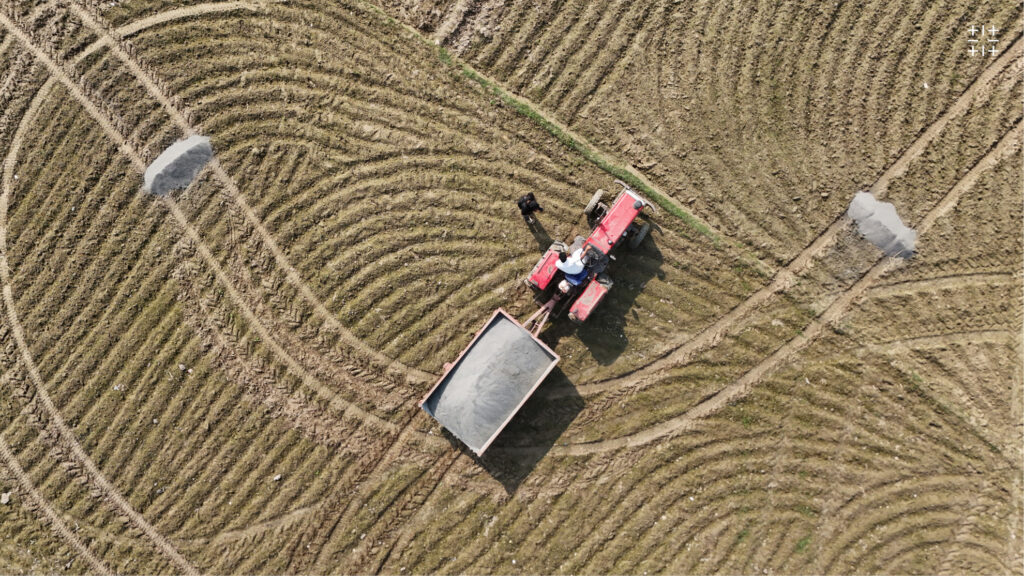
The solution: enhanced rock weathering (ERW) that capitalizes on Darjeeling’s proximity to the Himalayas and a region of high temperatures, heavy rainfall, humidity, acidic soils, and large basaltic rock deposits. “Those geological and meteorological conditions allow much faster rock weathering than in many other parts of the world.” Shrey added.
In January 2024, after completing laboratory and field trials and raising their first pre-seed venture funding round, the Agarwal brothers launched Alt Carbon, a deep-tech science and data company. They hired staff with complementary strengths across four core teams: science and technology, operations, marketing and branding, and carbon credit delivery.
The company’s key efforts include the Darjeeling Revival Project, which spreads Hari Mati — a proprietary combination of organic inputs and silicate-rich amendments — on degraded tea gardens and other regional crops. They describe the project as “A symphony of soil, science and a second chance.”
“When Hari Mati is applied, it improves soil nutrients, increasing organic carbon and stabilizing soil pH,” Shrey said. “Hari Mati provides an alternative, and in some cases an additional, soil conditioner that improves soil health and crop yields while also removing carbon.”
Darjeeling Climate Action Lab
Alt Carbon established the Darjeeling Climate Action Lab (D-CAL) in response to a “major bottleneck” in India: limited access to sufficient laboratories and equipment to analyze samples at scale with high accuracy and precision. “D-CAL was built to address that challenge by enabling high-throughput, high-precision analysis across soil, rock and water samples. This scientific backbone is essential for credibility, scalability and long-term impact,” Shrey noted.
“If the goal is to remove millions — or eventually billions — of tonnes of carbon, then you need massive sampling and analysis capacity,” he added.
D-CAL began as a 167-square-meter facility built in 41 days but later expanded to about 1,400 square meters, with full sample preparation and analytical capacity. The lab now serves as shared infrastructure for ERW across the Global South. Key impact metrics include average crop yield increases of 30-40 percent in tea and rice, improving incomes and supporting broader community health, education and engagement.
“Community is the backbone of everything we do,” Shrey said. “Our work touches multiple U.N. Sustainable Development Goals, and we always try to act with the long-term interests of these communities in mind.”
Data platforms for sustainability
Alt Carbon’s data platform Feluda, named after Satyajit Ray’s iconic fictional detective, supports measurement, reporting and verification by tightly linking field sampling, laboratory analysis and digital traceability. Shrey said, “Our approach prioritizes accuracy and precision, because trust in ERW measurement, reporting and verification is absolutely critical. We are also developing proprietary methods with our science team and partner labs globally to further improve how we constrain and measure rock weathering over time.”
To this end, all soil samples are geotagged, time-stamped and handled under registry-approved protocols, with data integrated from sensors and satellites. Feluda quantifies weathering rates and validates permanence using solid-phase and pore-water measurements, generating auditable documentation at scale for registries and independent verification.
The company’s core mission is to enable scientific talent and build the underlying infrastructure required to reach gigaton-scale carbon removal. While starting with ERW, Alt Carbon is “technology-agnostic” and expanding into biochar, working to scale multiple carbon removal pathways effectively, particularly for eastern India.
“We recently inaugurated our biochar initiative, the Bengal Renaissance Project,” Shrey said. “The idea is to use regional biomass availability to create networks of biomass banks, briquetting plants and gasification plants, allowing carbon removal through biochar at scale. In some ways, it is also about restoring confidence and opportunity in regions that are often overlooked in global climate discussions.”
Friends of Remineralize the Earth
Advanced technology and monitoring are critical to Alt Carbon fulfilling its mission, Shrey said, as the company builds what he describes as “agricultural infrastructure of planetary intelligence” for those in need. The approach maps soils and the biosphere, river systems, local air and mineral deposits, unifying fragmented data across earth, water and climate. The implications are far-reaching, rooted in one family’s tea field.
“By licensing our technology stack, providing access to labs, sharing knowledge and supporting credit delivery and revenue models, we can help remove barriers that slow most companies in this space,” he added. “That is how we believe gigaton-scale impact becomes possible.”
Why does Alt Carbon matter to Remineralize the Earth and its supporters? According to Shrey, the company’s work demonstrates how climate action, soil restoration and community resilience can be addressed together rather than in isolation. This core value fully aligns with the efforts of all champions of soil health, sustainability and humanity.
“Our work is turning one of the region’s most at-risk areas into a frontier of climate action. It is critical to address places with urgent needs. That is why our focus is on eastern India first, with plans to expand to other parts of India and eventually South Asia more broadly. For these regions, soil remineralization is not optional — it is a necessity.”
Carter Haydu is a senior content creator for King Abdullah University of Science and Technology (KAUST) in Saudi Arabia. Since 2012, he also has written about the Canadian energy sector for a Calgary-based trade publication. Carter has been a journalist since 2005, with much of his reporting delving into the environmental issues facing upstream oil and gas. He has written for Remineralize the Earth since 2018.
Support us on Patreon
Thank you for joining us today! Please become a member of RTE and support us on Patreon. Unlike many larger organizations, we work with a team of determined and passionate volunteers to get our message out. We aim to continue to increase the awareness of remineralization to initiate projects across the globe that remineralize soils, grow nutrient dense food, regenerate our forests’ and stabilize the climate – with your help! If you can, please support us on a monthly basis from just $2, rest assured that you are making a big impact every single month in support of our mission. Thank you!


Got something to say?