
COP30 InPlanet Discussion: Gigaton-Scale Carbon Removal in Brazil
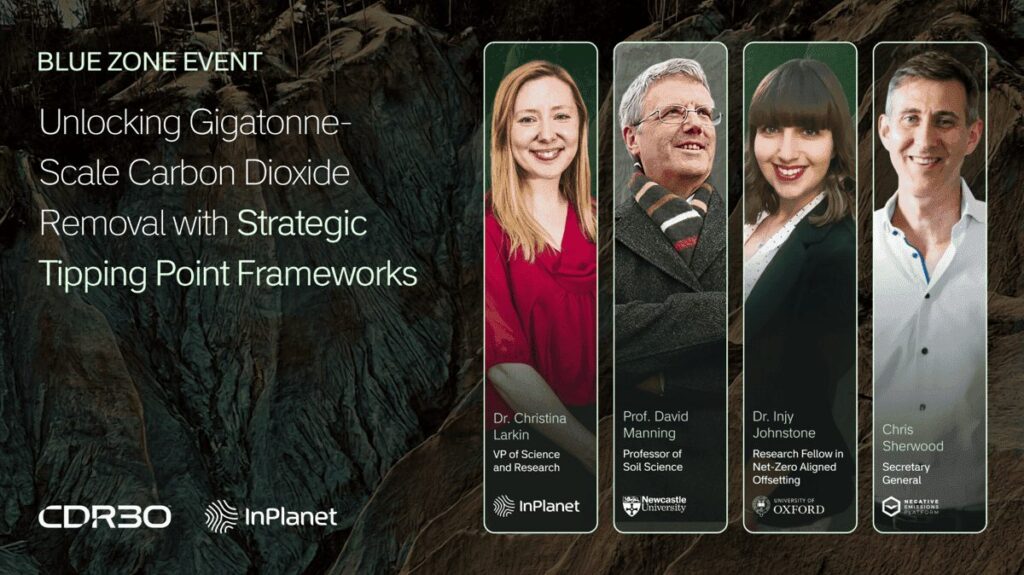
To align with guidelines of the IPCC, carbon dioxide removal (CDR) must scale rapidly to gigatonne levels over the coming decades. This was the theme of a panel discussion at the COP30 Blue Zone, where Dr. Christina Larkin, vice president of science and research at InPlanet, Dr. David Manning, professor of soil science at Newcastle University, and Dr. Injy Johnstone, an environmental lawyer and NetZero expert, further explored issues raised by the InPlanet paper Unlocking Gigatonne-Scale Carbon Removal with Strategic Tipping Point Frameworks. Together, they explored the social, institutional, and economic frameworks that need to change for enhanced rock weathering (ERW), and carbon removal more generally, to become a structural part of farming systems and contribute meaningfully to large-scale carbon dioxide removal.

Farmers are often characterized in agricultural economics literature as risk-averse, concerned that any deviation from what has worked in the past will upset the balance in unexpected ways. As a result, asking farmers to try a new methodology can be challenging. InPlanet refers to farmer’s commitment to established methods as a stability landscape. In order to achieve broader acceptance and utilization of rock dust in soils, farmers must become more familiar with the real-world agricultural efficacy and soil health benefits associated with remineralization.
The InPlanet paper argues that demonstration effects, experiential learning, and peer-to-peer knowledge sharing may be among the most effective ways to disseminate information about the benefits of remineralization. This necessitates farmers observing positive experiences and outcomes with ERW and communicating those experiences within the farming community. InPlanet frames this process as an effort to trigger a social adoption tipping point, at which uptake of remineralization could surpass incremental, linear growth.
The Tipping Point
The objective is to encourage a tipping point – a culmination of events that lead to a large and often rapid system level change – in the adoption of ERW among farmers. In Brazil, the strategy at work is known as the AAA framework: keeping remineralization Accessible, Attractive, and Affordable.
‘Accessible’ refers to ease of access, including the development and promotion of supply chains through which farmers can find and purchase rock dust. ‘Attractive’ refers to agronomic benefits of remineralization, like enhanced plant health, deeper root systems, and increased yields. ‘Affordability’ refers to cost considerations; rock dust is often an inexpensive byproduct of quarries.

Brazil is a promising setting for large-scale deployment of ERW. Brazil has over 90 million acres of cultivated cropland, with an additional estimated 210 million acres of pastureland. The country has been pioneering research and experimentation with rock dust application through the rochagem movement, led by researchers such as Professors Othon Henry Leonardos, Suzi Huff Theodoro, and Peter van Straaten. The word “rochagem” comes from “rocha”, which means “rock” in Portuguese, and refers to the process of applying rock dust to agricultural soils.
If these practices were adopted more widely and implemented effectively, Brazil could be responsible for gigatonne-scale carbon removal. In many cases, rock dust could easily be integrated into existing agricultural infrastructure. Quarry materials, transport networks, and the spreading equipment are already in use.
However, successful large-scale deployment would require institutional support, continued research, farmer training, and investment in measurement, reporting and verification (MRV) systems. While first-hand experience and community communication can support adoption, institutional buy-in and a strong evidence base remain critical for long-term integration into farming systems.
ERW and Biochar as Complementary Approaches
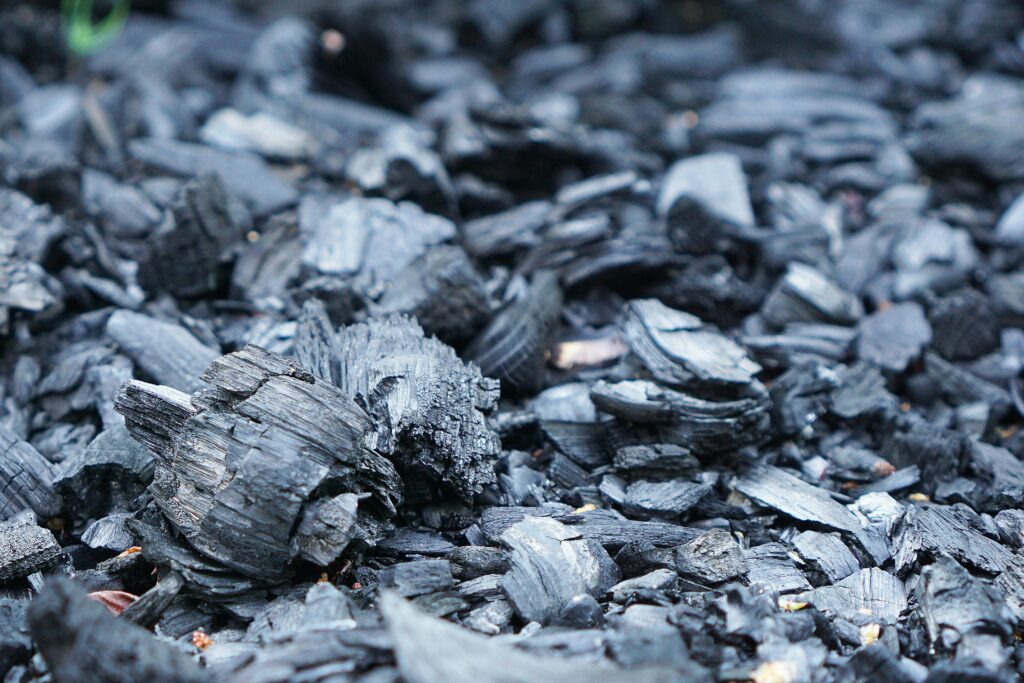
Enhanced rock weathering can be used alongside biochar: the two methodologies interact with carbon through distinct mechanisms. Enhanced rock weathering sequesters carbon by accelerating the natural weathering of silicate minerals, which react with carbon dioxide dissolved in rainwater and soil water to form stable bicarbonate and carbonate ions that can be stored long-term. Biochar sequesters carbon by converting biomass into a stable, charcoal-like material through pyrolysis, locking carbon into a decomposition-resistant form. When applied to soils, biochar creates a long-term carbon sink by significantly slowing the return of biomass carbon to the atmosphere. There is a growing body of evidence that suggests both ERW and biochar can support improved soil health and crop resilience under appropriate environmental and management conditions.
The goal of the panel, as described by the official description, was to highlight “how socio-ecological-technological tipping point models can accelerate the adoption of Enhanced Rock Weathering (ERW) and other durable carbon removal pathways, using Brazil’s emerging carbon market as a real-world case study.” Ongoing work will follow up on these proposals.
Alejandra Caballero Garcia is a marketing insights professional with a passion for sustainability, she graduated from the University of Denver with a Bachelor’s degree in Economics and Anthropology. Her writing highlights businesses championing sustainable agriculture and the intersection of carbon capture and community development.
Support us on Patreon
Thank you for joining us today! Please become a member of RTE and support us on Patreon. Unlike many larger organizations, we work with a team of determined and passionate volunteers to get our message out. We aim to continue to increase the awareness of remineralization to initiate projects across the globe that remineralize soils, grow nutrient dense food, regenerate our forests’ and stabilize the climate – with your help! If you can, please support us on a monthly basis from just $2, rest assured that you are making a big impact every single month in support of our mission. Thank you!


Got something to say?